


Smart buyers check documents first and pay later. Build your dream home in Vadodara with 100% peace of mind!

Buying a plot, duplex, or flat is a huge milestone in anyone’s life. Vadodara is growing rapidly, and areas like Bhayli, Gotri, Waghodia Road, and Sevasi are booming with new real estate projects. However, before you sign any agreement or hand over your hard-earned money to a developer or individual seller, you must verify the legal paperwork. To help you make a safe investment, we have created a simple property documents checklist in Vadodara so you can buy your dream property without any stress or future legal complaints.
Many buyers only look at the location, sample house, and amenities. But the most important part of any real estate transaction happens on paper. If the documents are not clear, you might face heavy financial losses or long court battles.
Let’s dive deep into the most critical documents you must verify before buying any real estate in Vadodara.
Why You Need a Property Documents Checklist in Vadodara
1. Title Deed (Sale Deed)

The title deed is the primary document that proves who owns the property right now. If you are buying a resale flat, duplex, or plot, you must ask the seller for the original Sale Deed.
- What to check: Ensure that the seller’s name on the deed matches their government ID (like Aadhar Card or PAN Card). There should be a clear chain of ownership, meaning you should know who owned the property before the current seller.
2. RERA Registration Certificate
If you are buying an under-construction flat, villa, or new plotted development project, it must be registered under Gujarat RERA (GUJRERA). RERA protects buyers from project delays and fraud.
- What to check: Ask the builder for the RERA registration number. You can visit the official GUJRERA website and enter this number to check the project’s approved plans, completion date, and whether the land has any legal disputes.
3. Non-Agricultural (NA) Land Permission
In Gujarat, all land is automatically considered agricultural land unless specified otherwise. You cannot construct a residential house, flat, or commercial building on agricultural land.
- What to check: For plots and duplexes, check the NA Certificate issued by the local collector or authority (like VMC or VUDA). It proves that the land has been legally converted for residential use. Buying a “Non-NA” plot for residential purposes is illegal and highly risky.
4. 7/12 Utara (Satbara Utara) and Property Card
The 7/12 Utara is a very crucial land record issued by the revenue department of the Gujarat government. For urban areas in Vadodara, this is often called a Property Card.
- What to check: This document contains details about the survey number, exact area of the land, and the names of current and past owners. Most importantly, it shows if there is any ongoing bank loan (boja) or legal dispute on that specific piece of land. Always ask for a fresh copy of the 7/12 document (not older than 3-6 months).
5. Commencement Certificate and Approved Building Plan
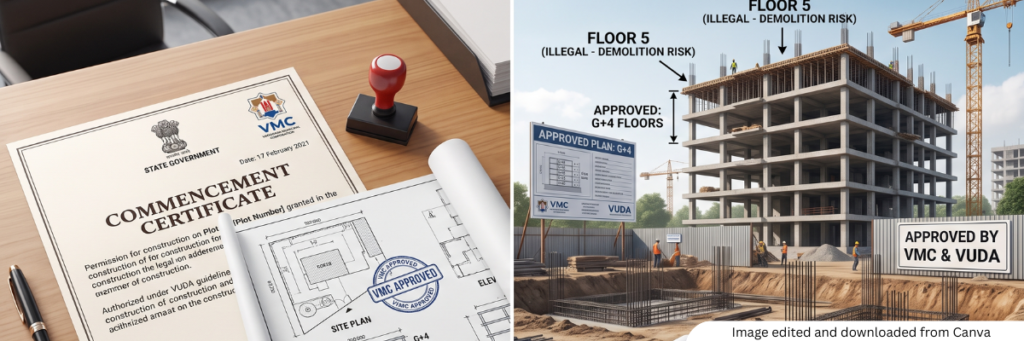
Before a builder starts digging the ground or laying bricks, they need permission from the local municipal corporation, such as the Vadodara Municipal Corporation (VMC) or Vadodara Urban Development Authority (VUDA).
- What to check: The Commencement Certificate is a green light from the government saying the builder can start construction. Also, check the approved blueprint map. If a builder has permission for 4 floors but is constructing 5 floors, the top floor is illegal and could be demolished later.
6. Encumbrance Certificate (EC)
An Encumbrance Certificate proves that the property is free from any legal liability, pending court cases, or unpaid monetary dues (like an active mortgage/home loan).
- What to check: You can get this document from the sub-registrar’s office where the property documents are registered. It tracks the history of the property for the last 15 to 30 years. A “Nil Encumbrance Certificate” means the property has a clean track record and no unpaid debts.
7. Occupancy Certificate (OC) and Possession Letter
Once the construction of a flat or duplex building is fully complete, the government authorities inspect it. If the building matches all safety codes and approved plans, they issue an Occupancy Certificate.
- What to check: Never take physical possession or move into a new flat without an OC. Living in a building without an OC is illegal, and the local municipality can cut off your water and electricity connections at any time. The Possession Letter is issued by the builder, confirming the date they are handing over the keys to you.
Common Legal Mistakes Buyers Make in Vadodara

Apart from checking the documents listed above, watch out for these common traps:
- Paying Token Money without a Draft Agreement: Do not give a large cash token to a seller before seeing the soft copy of the documents. Always write a basic “Alakh Mehsul” or token receipt detailing the terms.
- Ignoring Society NOC: If you are buying a resale flat in an established housing society, you need a No Objection Certificate (NOC) from the society management. This ensures the previous owner has paid all maintenance bills.
- Not Hiring a Professional: While this checklist is helpful, reading complex legal Gujarati terms in government documents can be tough. It is always wise to spend a small fee on a local property lawyer or a trusted property consultant to get a formal “Title Clearance Report.”
Conclusion: Take Your Time Before Saying Yes!
Buying property is a lifetime financial decision. A genuine seller or professional developer will never hesitate to show you their paperwork. If a seller is rushing you to pay money without showing the original documents, treat it as a red flag. Follow this basic checklist, ask the right questions, and secure your family’s future.
Are you looking to buy a verified, stress-free property in Vadodara? Don’t worry about the paperwork loop! Get in touch with our expert team today, and we will help you find the perfect legal-clear plot, flat, or duplex according to your budget.